
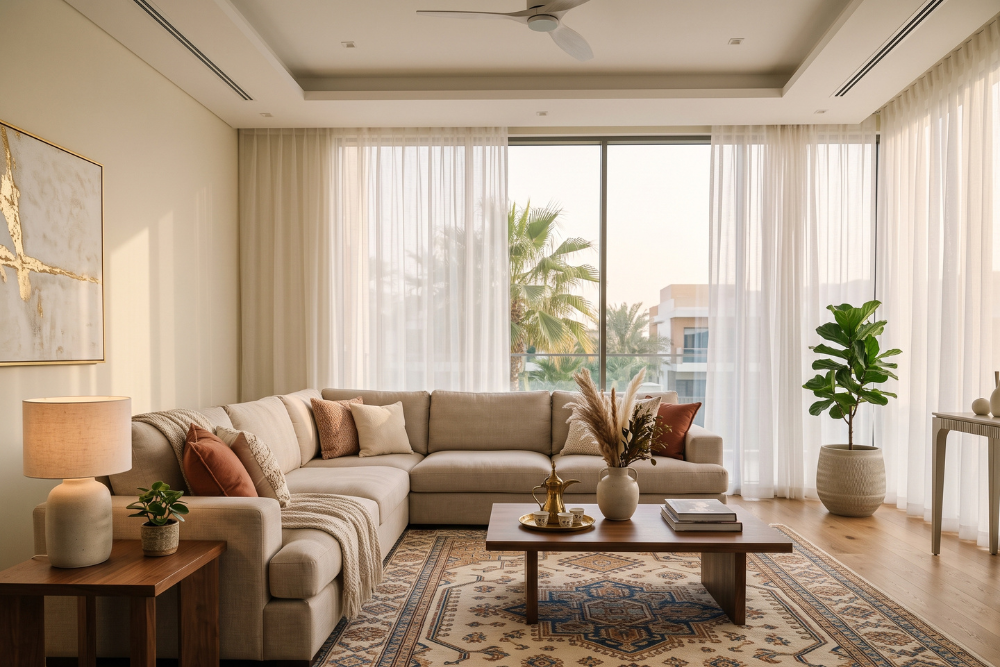
Here is the question we hear at least a dozen times a week in our showroom: “Should I go leather or fabric?” It sounds simple. It is not. The right answer depends on where you live in the UAE, how your family uses the sofa, whether your AC runs all day or part of the day, and whether you have kids, pets, or both. Get it wrong and you are replacing an AED 4,000 sofa in three years. Get it right and it goes fifteen.
At Karnak Home, we have been helping UAE families furnish their homes since 1988. In 38 years and over 70,000 families served, we have seen every upholstery failure you can imagine, leather cracking in poorly cooled villas, fabric fading next to West-facing windows, bonded leather peeling in two years, velvet collecting dust in Sharjah’s sandier suburbs. We are not going to sell you a sofa. We are going to tell you what we actually know so you can make a decision you will not regret.
The UAE climate is genuinely unusual for furniture. Temperatures swing from 45°C outdoors in August to 18°C inside heavily air-conditioned apartments. Humidity in coastal emirates, Dubai, Sharjah, Ajman, Umm Al Quwain, Ras Al Khaimah on the coast, can sit at 85–95% from June through September. Inland areas like Al Ain and parts of Abu Dhabi are drier but hotter in summer. These conditions affect every material differently, and an L-shape sofa, which typically covers four to six metres of surface area, amplifies everything. A small flaw in material choice becomes a very large, very visible problem very quickly.
How UAE Climate Affects Sofa Upholstery
Before comparing leather and fabric, it helps to understand what you are actually subjecting your sofa to every year in this country. Most guides written for European or American audiences do not account for these conditions at all.
The AC Factor: The Hidden Enemy of Leather
Air conditioning in UAE homes is not just about comfort, it runs for eight to twelve months of the year in most households, and the cold, dry air it produces is one of the most damaging environments for certain upholstery types. Full-grain and top-grain leather handles air conditioning reasonably well because its pores are intact and it retains natural oils better. Bonded leather, which is essentially leather dust pressed together with polyurethane, has no such resilience. The constant expansion and contraction between outdoor heat and indoor AC cold causes the polyurethane layer to separate and peel, usually starting at the seat edges within eighteen to twenty-four months.
Fabric sofas do not have this problem. Woven upholstery expands and contracts with temperature changes without any structural consequence. This is one reason fabric L-shape sofas often outlast budget leather ones in UAE homes, despite what buyers initially assume.
Humidity and Coastal Exposure
If your apartment or villa is within three kilometres of the coast, anywhere in Dubai Marina, JBR, Abu Dhabi Corniche, Sharjah’s coastal areas, or any waterfront community, humidity is a serious upholstery consideration. High moisture environments can cause natural leather to develop mold underneath the surface if the piece is placed against a wall with limited airflow, or near a window that sweats in summer. Semi-aniline and pigmented leathers are more resistant here because their surface treatments seal the pores. Plain aniline leather, which is beautiful, is genuinely unsuitable for coastal UAE homes without rigorous conditioning maintenance.
Fabric in high-humidity environments carries its own risk: mold growth within the foam or wadding beneath the fabric if the sofa is exposed to moisture or sits directly on cold marble floors without proper leg clearance. A sofa with at least 15cm leg height in a coastal apartment is not an aesthetic choice, it is a practical one.
Dust and Sand: The Sharjah, RAK, and Al Ain Challenge
Emirates further inland or exposed to desert winds deal with fine particulate dust that settles into fabric upholstery weaves constantly. Families in Al Ain, RAK’s inland areas, and parts of Sharjah near the desert border frequently report that light-coloured fabric sofas need cleaning every two weeks during windy seasons. Tightly woven microfiber and performance polyester blends resist dust penetration significantly better than loosely woven linens or cottons. Leather, in these environments, wins on one point: dust wipes off instantly. This is not a trivial advantage if you are cleaning your sofa twice a week.
Leather L-Shape Sofas in the UAE: The Full Picture
Leather has a reputation in UAE furniture retail that it does not entirely deserve. It is seen as premium, durable, and easy to clean. All of that is true, but only for certain types of leather. The category is enormous, and the differences between the best and worst within it are greater than the difference between good leather and good fabric.
Full-Grain and Top-Grain Leather: The Only Versions Worth Discussing Long-Term
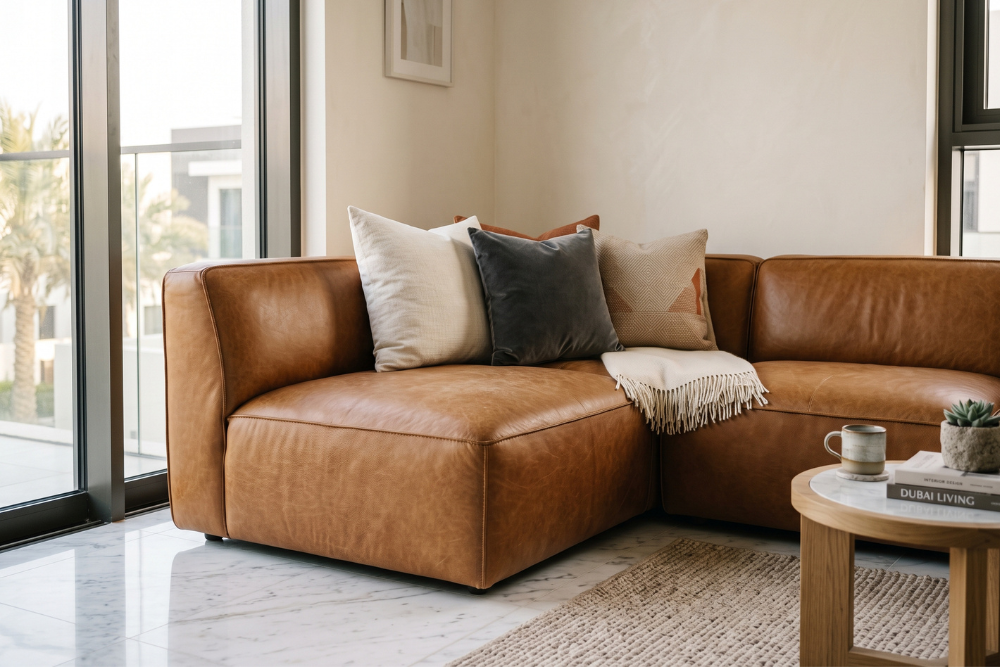
Full-grain leather is the outermost layer of the hide with all its natural grain intact. It is the most durable, develops a patina over time, and, critically for UAE conditions, breathes better than corrected or bonded alternatives. A full-grain leather L-shape sofa, properly conditioned twice a year, can last twenty years in a UAE home. Expect to pay AED 6,000–18,000 for a quality full-grain L-shape depending on size and frame construction.
Top-grain leather has the very surface of the hide lightly sanded and given a protective coating. It is more uniform in appearance, slightly less breathable, but significantly easier to clean and more resistant to staining. It represents excellent value for UAE families and is the most practical leather choice for homes with children. Price range for a well-constructed top-grain L-shape: AED 4,500–12,000.
Bonded Leather: What We Tell Every Customer
Bonded leather is not leather in any meaningful sense. It is a polyurethane composite that contains 10–20% leather fibres and 80–90% plastic. It looks like leather for the first twelve to eighteen months. Then it starts to crack at flex points, armrest edges, seat front edges, cushion corners, and within three years the surface is peeling in strips. We have seen it fail faster in UAE homes specifically because of the thermal cycling between outdoor heat and indoor AC.
We sell very little bonded leather. When customers come to us having bought it elsewhere and asking why it is peeling after two years, the honest answer is: this is what bonded leather does. It is not a defect. It is the product working as designed.
Leather and UAE Family Life: Realistic Expectations
Leather is easier to wipe clean than most fabrics. Spilled juice, food, and water clean up with a damp cloth if caught quickly. It does not trap pet hair. It does not absorb odours as readily as fabric. These are genuine advantages for active UAE families.
The downsides are equally real. Leather in a room that gets direct afternoon sun through West-facing windows will fade and dry out faster regardless of quality. It can feel uncomfortably warm in the brief period before AC brings a room down to temperature, particularly in older UAE buildings where insulation is limited. And quality leather requires maintenance: conditioning every six months with a pH-neutral leather conditioner keeps it supple and crack-resistant. Skip this step and even good leather deteriorates.
Fabric L-Shape Sofas in the UAE: What the Experts Know
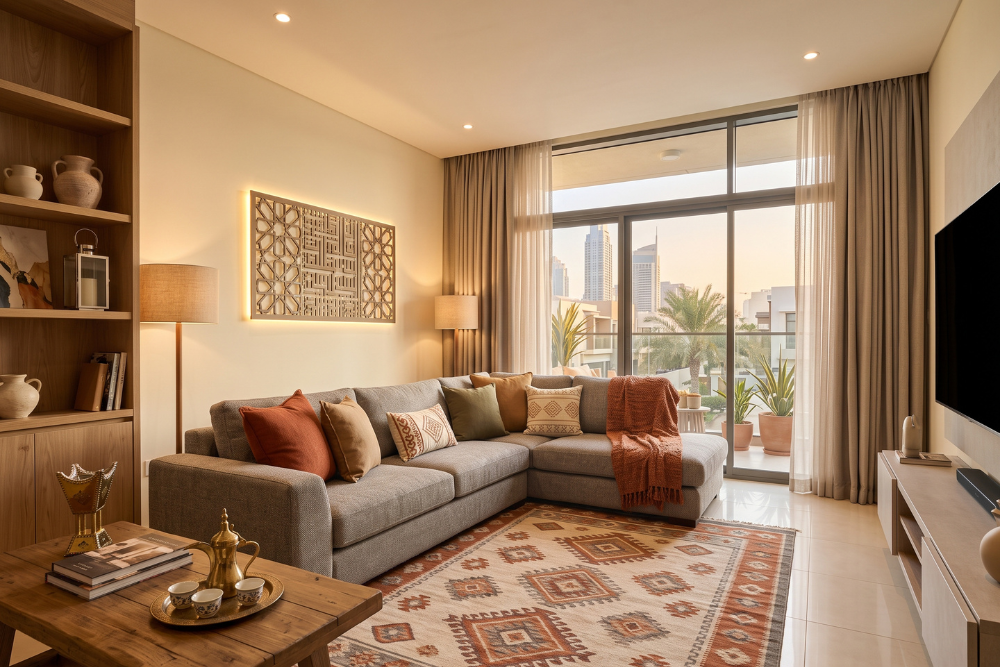
Fabric has been unfairly dismissed by a generation of UAE buyers who associate it with staining and difficulty. The category has changed enormously. Performance fabrics developed in the last ten years are stain-resistant, fade-resistant, and in some cases washable, and they perform genuinely well in Gulf climate conditions.
The Fabrics That Work and the Ones That Do Not
Microfiber (Microsuede): The most practical fabric choice for UAE families. Ultra-tightly woven synthetic fibres resist staining, dust penetration, and fading. Cleans easily with a damp cloth. Does not crack or peel. Available in virtually every colour. An L-shape in quality microfiber upholstery: AED 2,800–7,000.
Performance Polyester Blends: Engineered specifically for durability and easy cleaning. Looks and feels more like traditional upholstery fabric but carries most of the same maintenance advantages as microfiber. Good for families who want the softness of fabric without the vulnerability of natural fibres. Price range similar to microfiber.
Velvet: Popular in UAE interior design right now, and understandably so, it photographs beautifully and the texture reads as luxurious in villa-sized living rooms. Practical limitations are real though. Velvet shows crush marks from sitting patterns, requires regular brushing, and traps pet hair effectively. It is not a strong choice for households with children under ten or pets. For formal sitting rooms or guest majlis-adjacent spaces that see lighter use, it works well.
Linen and Cotton Blends: Comfortable and breathable, but genuinely not suitable as a primary sofa fabric in UAE homes. They stain readily, fade in sunlight, and are difficult to clean properly. If a customer specifically wants a natural-fibre look, we recommend a linen-look polyester blend that delivers the aesthetic without the maintenance burden.
Cotton Canvas: Occasionally seen in more casual, contemporary interiors. Durable, inexpensive, and washable in some configurations, but fades noticeably in UAE sun exposure and wrinkles over time.
Fabric and Colour in UAE Light Conditions
The intensity and duration of sunlight in UAE homes is not comparable to northern climates. South or West-facing windows without adequate UV-filtering glass or blackout/sheer layering will fade fabric upholstery significantly faster than the manufacturer’s estimates, which are typically based on European or North American light exposure data.
As a practical rule: any fabric sofa placed within two metres of an uncovered South or West-facing window in the UAE will show visible fading within two to three years regardless of fabric quality. Darker colours fade in a way that shows as uneven bleaching. Lighter neutrals tend to fade more evenly and less obviously. If placement near windows is unavoidable, apply UV-blocking window film, it protects the sofa, the flooring, and the family.
Fabric and Kids: The Practical Reality
Parents of young children consistently tell us the same thing: they bought leather because they thought it would be easier to clean, and they are now considering fabric for their second sofa. The reason is texture. A child sliding off a leather sofa leaves no mark. A child running toy cars along it leaves fine scratches. A teenager eating chips on leather leaves grease smears that require proper leather cleaner, not just a cloth. Microfiber, counterintuitively, handles most food spills as well as leather and is far more forgiving of everyday rough use.
Apartment vs Villa: Does It Change the Decision?
The answer is yes, meaningfully. UAE homes vary enormously between a 900 sq ft apartment in Dubai Sports City and a 4,000 sq ft villa in Arabian Ranches, and the sofa decision should account for the context.
Apartment Considerations
In a typical UAE apartment, one to three bedrooms, living room between 25–45 sq metres, an L-shape sofa is often the primary furniture piece and the room’s dominant visual element. The constraints are:
Space: L-shape sofas in apartment settings typically work best at 240–280cm on the long side and 150–170cm on the short side. Going larger crowds the room and makes movement awkward. Chaise configurations, where one end is a lounger rather than a second full arm, suit smaller apartments particularly well.
Maintenance access: Apartments have less storage space, meaning cleaning supplies need to be accessible and routines need to be simple. This slightly favours leather (wipe-and-done) or performance microfiber over high-maintenance fabrics.
Visual warmth: Apartments benefit from the warmth that fabric brings. A large leather sofa in a small apartment can feel clinical. Mid-tone fabric in warm beige, sage, or terracotta reads as more inviting in compact spaces.
Villa Considerations
Villas offer more room to work with but introduce different challenges. Many UAE villas have living rooms that open to outdoor areas, meaning doors are opened regularly, sand and dust enter frequently, and the thermal environment fluctuates more than in sealed apartments.
For formal sitting rooms or spaces adjacent to gardens, leather performs better because it handles dust wipe-downs better. For family TV rooms and daily-use spaces, performance fabric wins on comfort and practicality.
Villas in gated communities with central district cooling (common in newer Abu Dhabi and Dubai developments) actually have more stable thermal environments than independently cooled apartments, which benefits leather longevity specifically.
Common Mistakes UAE Buyers Make
After 38 years in UAE furniture retail, these are the decisions we see families regret most often.
Mistake 1: Buying Bonded Leather to Save Money
This is the single most common regret we encounter. Bonded leather sofas priced at AED 1,800–2,800 seem like excellent value. Two years later, when the surface is peeling at every flex point, the family faces either living with a deteriorating sofa or replacing it entirely. A quality top-grain leather sofa at AED 5,000 or a microfiber alternative at AED 3,500 will outlast three bonded leather replacements. Total cost of ownership matters more than purchase price.
Mistake 2: Choosing Light Leather Near West-Facing Windows
Light cream or ivory leather in a room with an uncovered West-facing window is a combination we caution every customer against. The thermal stress from afternoon sun, which in UAE summers means direct intense light from around 1pm to sunset, accelerates drying and cracking even in quality leather. If you love light upholstery, fabric in a tight weave with UV window film is a more practical combination.
Mistake 3: Selecting Sofa Colour Based on Showroom Lighting
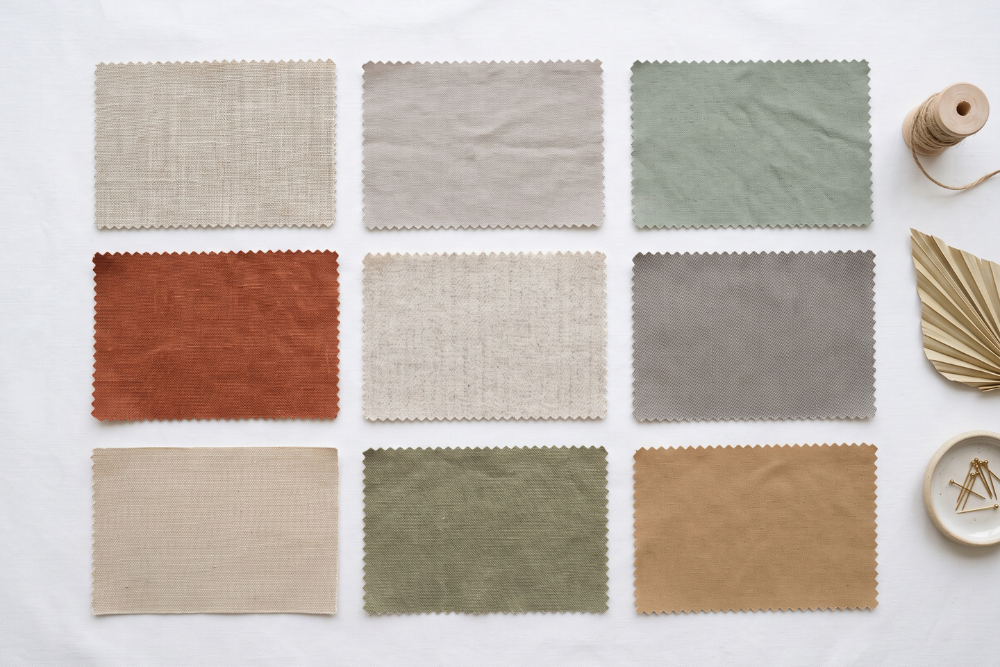
Showroom lighting is calibrated to make furniture look its best. A deep charcoal microfiber sofa that looked rich and sophisticated under halogen showroom lighting can look flat and cold under the warm LED lighting common in UAE apartments, or overpoweringly dark in a room with limited natural light. Always ask for a fabric sample to view at home before confirming a colour order.
Mistake 4: Underestimating L-Shape Dimensions
We have delivered hundreds of L-shape sofas over the years that owners subsequently wished were larger, and a smaller number that could not fit through apartment doors or around stair corners. Before purchasing, measure your living room wall-to-wall, account for clearance in front of the sofa (at least 90cm to a coffee table), and check every doorway, lift, and corridor the sofa will need to pass through during delivery. Standard UAE apartment lift interiors are typically 120cm deep and 200cm tall, verify this before ordering anything longer than 220cm per section.
Mistake 5: Ignoring Frame and Cushion Construction for UAE Lifestyle
UAE families use their sofas intensively. Extended family gatherings, weekend stays from relatives, Ramadan nights where the sofa becomes a sleeping surface, these are not occasional events, they are regular ones. Frame construction (kiln-dried hardwood versus engineered wood versus metal) and foam density (anything below 28kg/m³ will compress noticeably within two years of heavy use) matter as much as the upholstery you choose. At Karnak Home, we specify foam density in all our product descriptions for exactly this reason.
AED Pricing Guide: What to Budget in 2026
Honest pricing transparency saves everyone time. Here is what you can realistically expect to pay for a quality L-shape sofa in the UAE market in 2026:
Fabric L-Shape (Microfiber/Performance Polyester):
- Entry-level: AED 2,200–3,500
- Mid-range: AED 3,500–6,000
- Premium: AED 6,000–10,000+
- Mid-range: AED 4,500–8,000
- Premium: AED 8,000–15,000
- Premium to luxury: AED 9,000–20,000+
What Drives Cost:
Frame construction is the largest cost variable and the hardest to assess visually. Kiln-dried solid wood frames with corner-blocked joints cost more but last significantly longer than MDF or soft-wood alternatives. The second variable is foam density and layering, quality sofas layer different foam densities for support at the base and comfort at the surface. The third is upholstery grade. Within any material category, there is a wide range of quality. Ask specifically about rub count (the measure of fabric durability), anything below 25,000 double rubs is light-duty; 50,000 and above is appropriate for UAE family use.
VAT at 5% applies to all furniture purchases in the UAE. All pricing above excludes VAT.
Expert Tips from 38 Years in UAE Furniture
1. Condition leather twice a year, not once.
Manufacturers say annually. UAE conditions, the AC cycling, the occasional summer heat exposure, the low indoor humidity of heavily air-conditioned spaces, mean semi-annual conditioning is genuinely necessary. Use a pH-neutral conditioner, not olive oil or any home remedy. We have seen well-intentioned home treatments cause more damage than neglect.
2. Rotate your cushions monthly.
Reversible seat cushions extend fabric life significantly by distributing wear evenly. If your L-shape has non-reversible cushions, rotate them between positions. The corner seat of an L-shape receives the highest use, without rotation, it compresses and fades faster than the rest.
3. For kids and pets, choose performance fabric over leather by default.
Unless you are purchasing full-grain leather at the higher price point, pets’ claws and children’s general chaos are more forgiving on quality microfiber than on any leather grade. The common assumption is the reverse.
4. Use a fabric protector spray on new fabric sofas.
Applied before first use on a new fabric sofa, a quality upholstery protector (available at most UAE supermarkets and hardware stores for AED 40–80) creates a surface barrier that makes most spills bead and wipe away cleanly. Reapply every twelve months.
5. Never place a leather sofa within one metre of a working AC unit.
Direct airflow from a split AC unit hitting leather upholstery continuously dries it out significantly faster than ambient AC cooling. This is a positioning issue we raise with every leather sofa customer, because it is easy to overlook during showroom planning.
6. In UAE villas with marble flooring, use sofa legs with felt pads.
This protects the flooring and provides enough lift to improve airflow under the sofa, which matters for both dust management and preventing the slight moisture accumulation that can affect foam over years.
7. Ask about fabric origin, not just name.
“Microfiber” describes a weave density, not a quality standard. A microfiber from a quality Belgian or Italian mill is categorically different from a microfiber produced at minimum specification. When evaluating sofas, ask about the fabric origin and rub count. A supplier who cannot answer these questions quickly probably does not know, which tells you something about the product.
8. Match material to your actual cleaning routine, not your aspirational one.
Every family intends to care for their sofa. UAE life is busy. Be honest about how often you will actually condition leather, brush velvet, or deep-clean fabric. Buy the sofa that works with your real routine, not the one that requires the ideal one.
Conclusion: Making Your Decision
If you have read this far, you have enough information to make a confident decision. Let us bring it to a simple framework:
Choose top-grain leather if:
You have a stable, well-cooled home without direct sun on the sofa position, you prefer easy daily wipe-downs, you do not have cats or dogs, and you are willing to condition the piece twice a year.
Additinally, choose full-grain leather if:
You are furnishing a formal sitting room or guest space that sees moderate use, you have the budget for a long-term investment, and you want a piece that genuinely improves with age.
Moreover, choose performance fabric (microfiber or polyester blend) if:
You have children under twelve, you have pets, your sofa gets daily intensive use, your AC faces the sofa directly, or your budget is under AED 6,000. This is the most practical choice for the majority of UAE family homes and we say that honestly after nearly four decades of seeing what lasts.
Avoid bonded leather entirely. There is no situation where it represents value in UAE conditions.
Key Takeaways:
- UAE climate makes material choice more consequential than in most markets, thermal cycling, humidity, and dust all affect upholstery lifespan directly
- Bonded leather fails within two to three years in UAE conditions regardless of brand or price paid
- Performance fabric (microfiber and quality polyester blends) is underrated and outperforms budget leather in longevity and practical family use
- Full-grain and top-grain leather are genuinely excellent if purchased at the right quality level and maintained correctly
- Frame construction and foam density matter as much as upholstery, ask about both before purchasing
Ready to Find Your L-Shape Sofa?
At Karnak Home, every L-shape sofa in our collection is selected with UAE conditions in mind. We specify foam density, fabric rub counts, and frame construction in our product descriptions because we believe you deserve that information before buying. Our showroom team, most of whom have spent years advising UAE families on exactly these decisions, can help you match the right material, size, and configuration to your specific space.
Browse our full L-shape sofa collection online at your convenience, or visit us in the showroom where you can feel the difference between materials in person, which no photograph can replace.
Shop Online: Karnak Home Corner & L-Shape Sofa Collection
Visit Our Showroom: Dubai – Showroom Address & Directions
Expert Advice: Call Us or WhatsApp our team for personalised guidance