
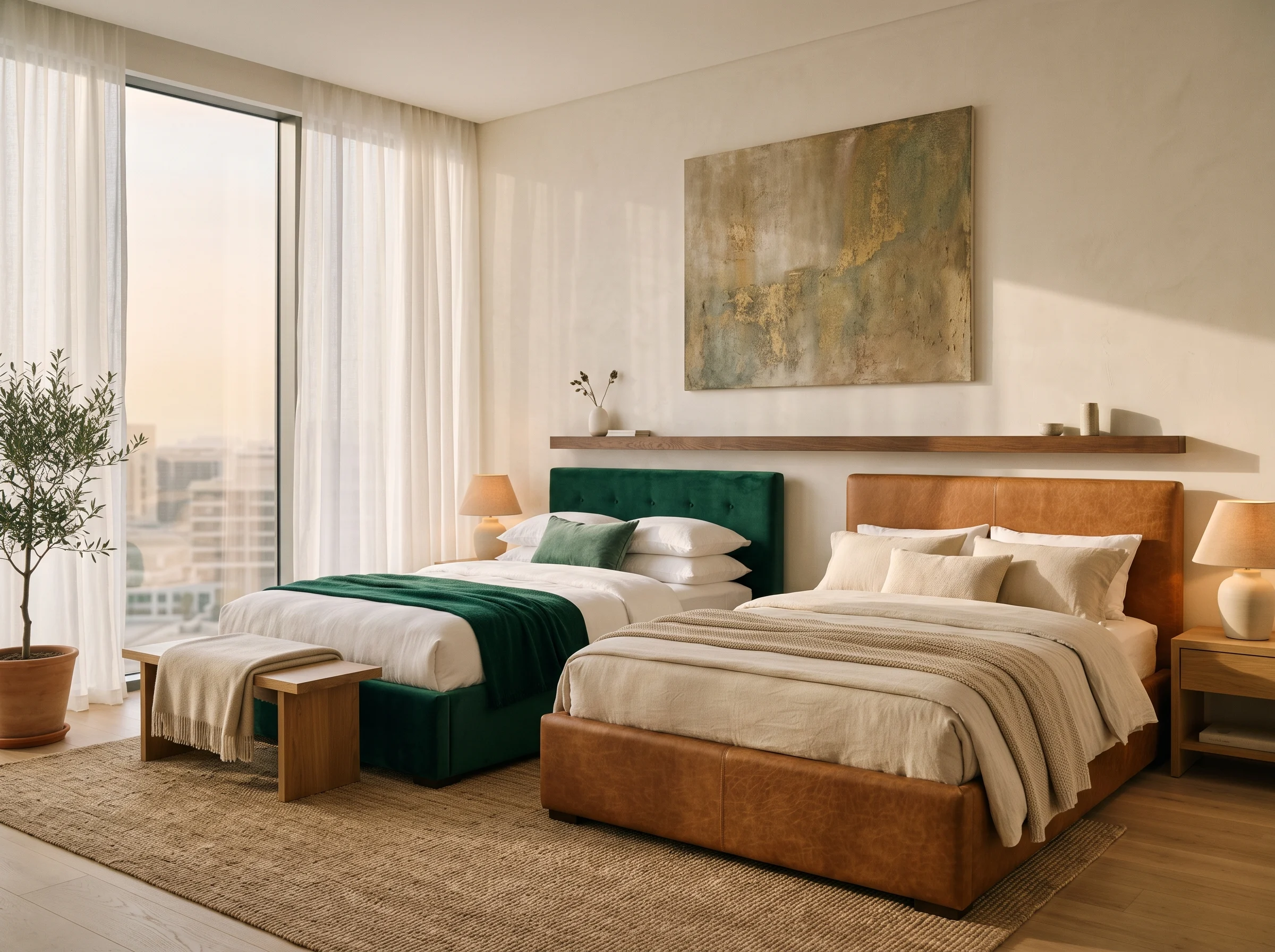
If you’ve stood in a showroom running your hand over a plush velvet headboard, then walked ten feet to touch a smooth leather one, you already know the dilemma. Both look stunning in photos. Both feel completely different by month six in a Dubai home. At Karnak Home, we’ve fitted out bedrooms for over 70,000 UAE families since 1988, and this is one of the questions we get asked more than almost any other: which upholstery actually survives Dubai’s climate, and which one just looks like it will?
This matters more here than almost anywhere else in the world. Dubai summers push outdoor temperatures past 45°C, indoor AC runs almost continuously for six to seven months a year, and humidity swings dramatically between coastal and inland areas. That combination of heat, dryness, and moisture cycling is hard on upholstery in ways that don’t show up until a bed has lived through at least one full summer. We’ve seen both materials age beautifully and both age badly, and the difference usually comes down to choices made before the purchase, not after.
As reported by Khaleej Times UAE, keeping up with regional developments and lifestyle trends is essential for homeowners looking to elevate their living spaces in the UAE.
How Dubai’s Climate Actually Affects Bed Upholstery
The AC-Humidity Cycle Nobody Talks About
Most people think of Dubai as simply hot and humid. What actually stresses furniture is the constant switching. Walk from a humid Jumeirah balcony into a bedroom running at 21°C on the AC, and the fabric or leather on your bed experiences a rapid shift in moisture content. Over months, this cycling causes fibers to expand and contract repeatedly. Velvet handles this differently than leather, and neither handles it the same way it would in a drier, more stable climate like much of Europe.
In villas near the coast, from Jumeirah to Palm Jumeirah, ambient humidity even indoors can sit higher than in inland communities like Arabian Ranches or Dubai Hills. That’s a genuine factor in which material will perform better for your specific home, not just a general climate note.
Why AC Dryness Is the Bigger Long-Term Risk
Counterintuitively, the bigger threat to leather in Dubai homes isn’t humidity, it’s the opposite. AC units strip moisture from the air, and leather is a natural material that needs a small amount of ambient moisture to stay supple. Homes running AC at aggressive settings for months at a time can leave leather beds feeling drier and stiffer far sooner than the same leather would age in a humid, non-AC environment. We’ve inspected leather beds in Dubai homes just three years old that show cracking typical of eight-to-ten-year-old furniture in milder climates, almost always traced back to low ambient humidity and no conditioning routine.
Velvet Beds: Strengths and Weaknesses in UAE Homes
Where Velvet Performs Well
Good quality velvet, particularly performance velvet with a tight weave and synthetic fiber blend, handles Dubai’s AC dryness better than leather because it isn’t relying on natural oils to stay flexible. It doesn’t crack, and it won’t show the same fine surface fissures that dry leather develops over time. In a well-sealed, consistently air-conditioned apartment in Downtown Dubai or Business Bay, this is a genuine advantage.
Velvet also comes in a far wider color and texture range, which matters for UAE homes that lean toward statement bedroom furniture. Deep jewel tones, textured weaves, and tufted headboard designs are far more achievable in velvet than leather, and we see this reflected clearly in what UAE families choose for primary bedrooms versus guest rooms.
Where Velvet Struggles
The honest downside is humidity absorption and staining. Velvet fibers, especially natural or cotton-blend velvets, absorb moisture and odors more readily than leather. In villa bedrooms without strong AC coverage, or in ground-floor rooms near gardens where humidity can seep in, velvet can develop a faint musty smell over one or two humid seasons if not properly ventilated. It’s also considerably harder to clean. A coffee spill or a child’s marker mark on velvet often means professional upholstery cleaning, while the same incident on leather is usually a five-minute wipe-down.
Performance Velvet vs Standard Velvet
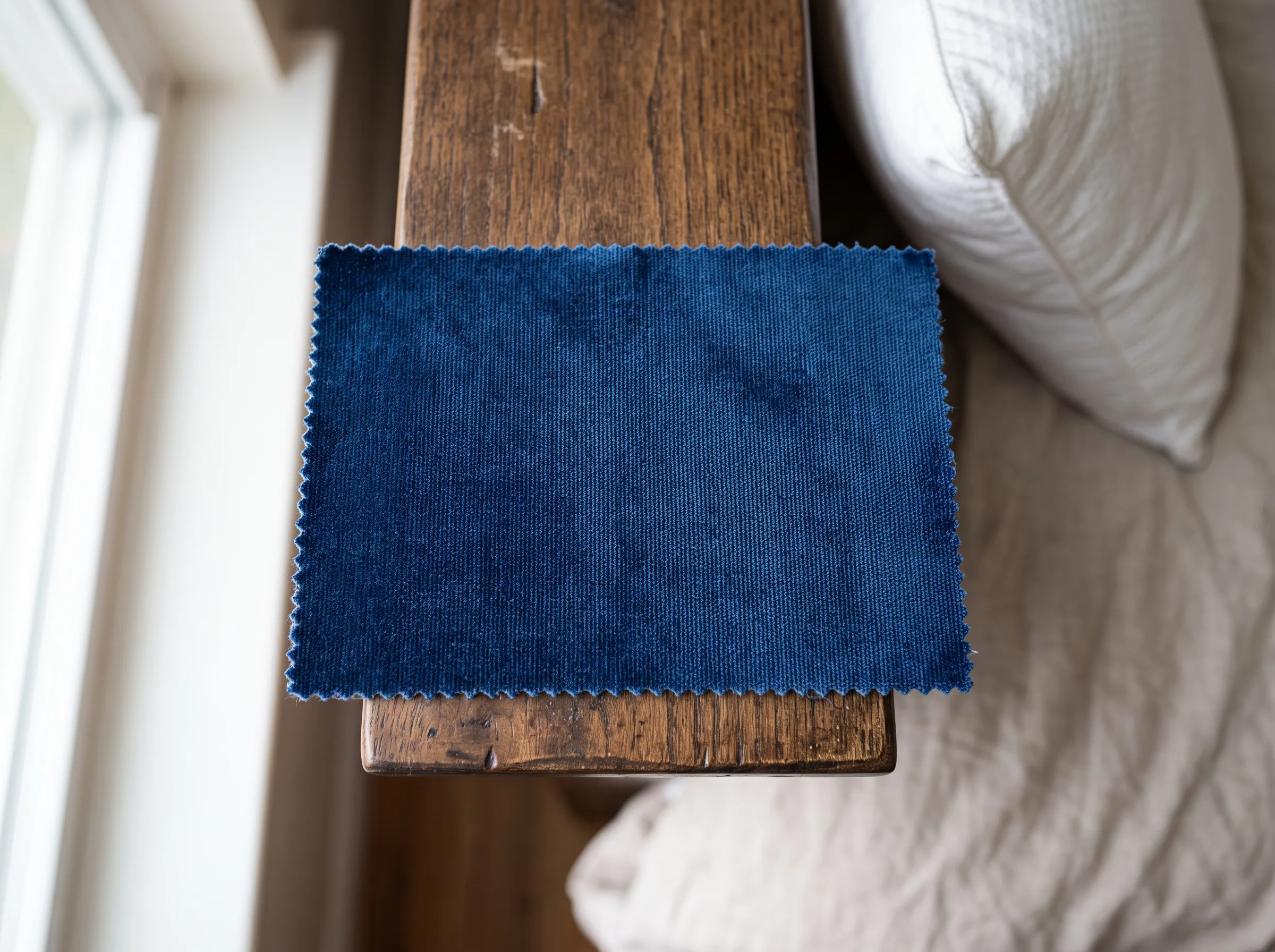
This distinction matters enormously and most furniture buyers in Dubai aren’t told about it. Standard velvet, often cotton or rayon-based, is genuinely vulnerable to humidity and staining. Performance velvet, made with polyester or specially treated synthetic fibers, resists moisture, stains, and fading far better while keeping the same soft hand-feel. At Karnak Home, this is why our upholstered bed collection specifies performance-grade fabric on most velvet models. It costs more at the fabric level but performs closer to leather in terms of climate resilience.
Leather Beds: Strengths and Weaknesses in UAE Homes
Where Leather Performs Well
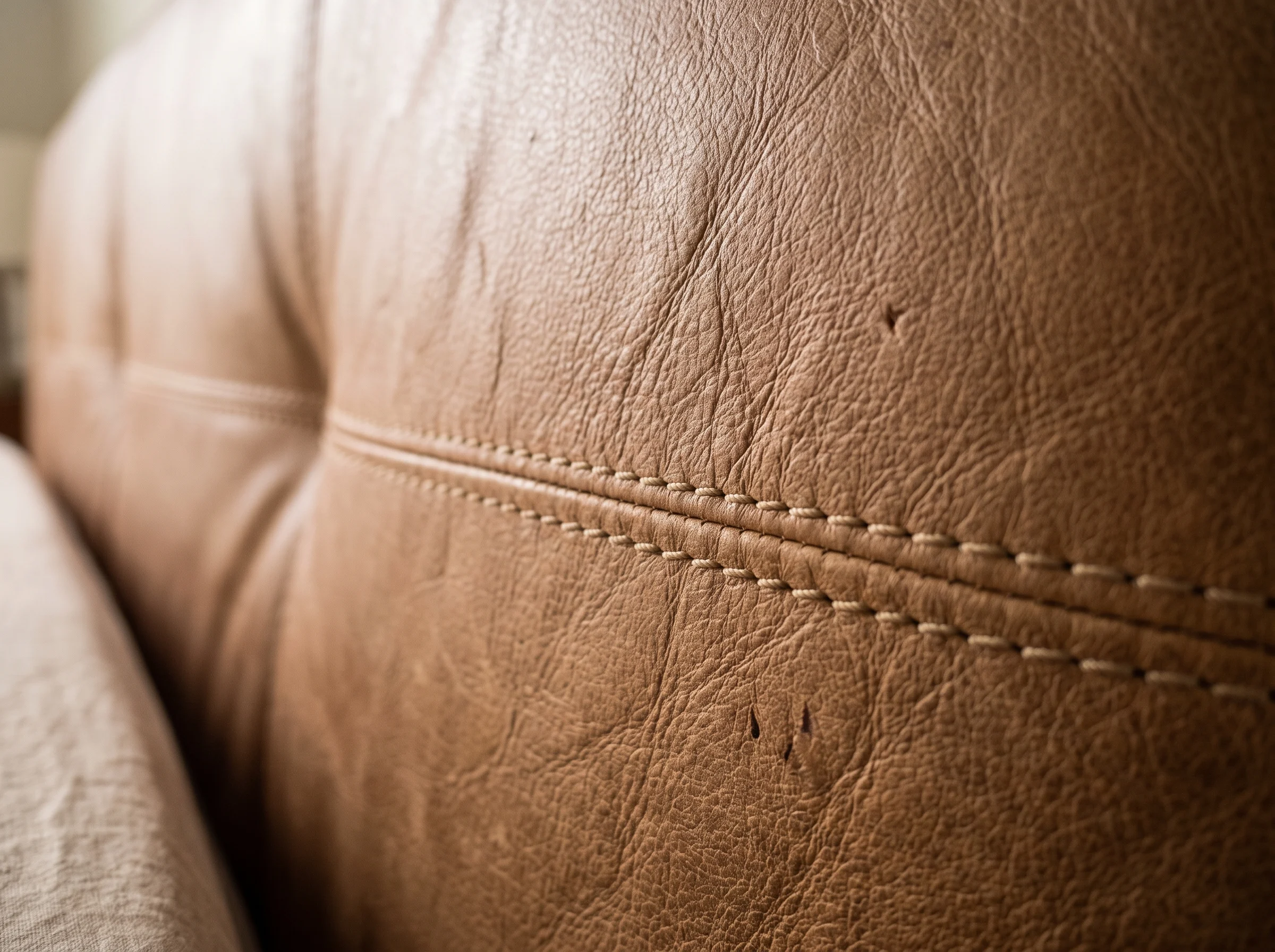
Leather’s biggest advantage in Dubai homes is practicality. It wipes clean instantly, doesn’t trap dust or allergens the way fabric does, and doesn’t absorb odors from cooking, humidity, or daily use. For families with young children or anyone managing allergies, this is a meaningful quality-of-life difference. Leather also tends to look more consistent over time in high-AC apartments, where the dryness that hurts real leather elsewhere is less severe simply because the material isn’t being exposed to extremes.
Genuine leather, properly conditioned, also has a longevity advantage. A well-maintained genuine leather bed frame can outlast a velvet one by several years, developing a patina rather than visible wear.
Where Leather Struggles
Leather’s enemy in Dubai is the exact opposite of velvet’s: dryness, not moisture. Without conditioning, genuine leather loses its natural oils under constant AC exposure and begins to crack, particularly along stress points like the headboard curve and footboard edges. It’s also noticeably warmer to the touch and can feel less comfortable to lean against in the brief periods AC isn’t running, such as during a power outage or in villas with less consistent cooling coverage.
Faux leather, or PU leather, is the more budget-conscious option but has a real weakness in Dubai specifically: prolonged heat exposure, even indirect heat near windows or under strong sun through glass, accelerates the peeling and cracking that PU leather is already prone to. We generally steer families away from faux leather for any bed frame positioned near a west-facing window that gets strong afternoon sun.
Genuine vs Faux Leather for This Climate
Genuine leather, while pricier upfront, is the better investment for Dubai’s climate specifically because it can be conditioned and restored. Faux leather cannot; once it starts cracking or peeling, the only fix is reupholstering. If budget allows, genuine or top-grain leather is worth the difference for a bed frame you plan to keep for eight-plus years.
Product and Style Options at Karnak Home
Karnak Home carries both velvet and genuine leather upholstered bed frames, with performance-grade fabric options across most of our velvet range specifically chosen for Gulf climate durability. Our team can walk you through fabric samples in-showroom so you can feel the weave difference between standard and performance velvet before deciding, and compare genuine leather grades side by side. If you’re furnishing a full bedroom, our bedroom furniture collection also includes matching wardrobes and nightstands designed to coordinate with either upholstery choice. Beyond bedroom designs, we apply these same high standards for climate resilience to our living room sofa collection.
Common Mistakes UAE Families Make When Choosing Bed Upholstery
Mistake 1: Choosing Purely on Showroom Feel
A fabric feels different after six months of AC exposure than it does on day one in a climate-controlled showroom. Ask specifically how a material performs after a full Dubai summer, not just how it feels today.
Mistake 2: Skipping Leather Conditioning Entirely
Genuine leather beds need conditioning roughly every 3 to 4 months in AC-heavy homes. Families who treat leather as maintenance-free are the ones who see cracking within two to three years.
Mistake 3: Choosing Standard Velvet for Villa Bedrooms Near Gardens
Ground-floor villa rooms with garden-adjacent humidity are a poor match for standard velvet. Performance velvet or leather is the safer choice in these specific rooms.
Mistake 4: Placing Leather Beds Near Direct Window Sun
Prolonged UV and heat exposure dries out leather far faster. Position leather bed frames away from direct afternoon sun, or use UV-filtering curtains.
Mistake 5: Ignoring Fiber Content on Velvet Labels
“Velvet” alone doesn’t tell you performance. Always ask whether it’s cotton, rayon, or performance polyester blend, since the durability difference in Dubai’s climate is significant.
Budget and Pricing Guidance
Upholstered bed frames at Karnak Home typically range from AED 2,500 for compact single and queen-size standard velvet frames to AED 7,500+ for king-size genuine leather frames with premium detailing. Performance velvet typically adds 10 to 15% over standard velvet at the fabric level, but this is a worthwhile investment for most Dubai homes given the climate factors above. Faux leather frames sit lower, often AED 1,800 to 3,500, but come with the heat-exposure caveats mentioned earlier. Genuine leather represents the highest upfront cost but the lowest long-term replacement cost for families planning to keep a bed frame for a decade or more. If you are furnishing space for younger family members, we also offer durable selections within our kids furniture range.
Expert Tips From 35 Years of UAE Furniture Experience
- Ask your showroom specifically whether a velvet option is performance-grade before assuming it is
- Condition genuine leather beds every 3 to 4 months, more often in high-AC bedrooms
- Keep leather bed frames at least 1 meter from direct west or south-facing window sun
- For villa ground-floor bedrooms, favor leather or performance velvet over standard velvet
- Vacuum velvet headboards weekly with a soft brush attachment to prevent dust buildup
- Test any cleaning product on a hidden fabric corner before treating a visible stain
- If you have young children, genuine leather or performance velvet both outperform standard fabric for stain resistance
- Rotate and fluff velvet headboard cushions periodically to prevent permanent compression marks
Conclusion: Making Your Decision
There’s no single correct answer between velvet and leather for Dubai homes, only the right answer for your specific bedroom, family, and budget. If your priority is easy cleaning, allergy management, and long-term durability under heavy AC use, genuine leather is likely the stronger choice. If you want a wider range of colors and textures and are willing to invest in performance-grade fabric and slightly more careful maintenance, velvet delivers a look that’s hard to match.
Key Takeaways:
- Dubai’s AC dryness is harder on leather than humidity is; leather needs regular conditioning to avoid cracking
- Standard velvet absorbs moisture and odors more easily; performance velvet closes most of that gap
- Faux leather is budget-friendly but vulnerable to heat and sun exposure specifically in this climate
- Villa bedrooms near gardens favor leather or performance velvet over standard velvet
- Genuine leather costs more upfront but often works out cheaper over 8 to 10 years of ownership
Frequently Asked Questions
Is velvet or leather better for Dubai’s humidity?
Leather generally resists humidity and moisture absorption better than standard velvet, but Dubai’s AC-driven dryness can actually crack unconditioned leather faster than humidity affects performance-grade velvet. The better choice depends on your specific room, AC usage, and maintenance routine.
Does AC damage leather bed frames in Dubai homes?
Yes, prolonged AC exposure strips natural moisture from genuine leather, which can lead to cracking if the leather isn’t conditioned every 3-4 months. This is one of the most common issues we see in Dubai bedrooms.
What is performance velvet and is it worth it in the UAE?
Performance velvet is made with polyester or treated synthetic fibers that resist moisture, staining, and fading better than standard cotton or rayon velvet. In Dubai’s climate, it’s generally worth the 10-15% price premium for better long-term durability.
Is faux leather a good choice for bed frames in Dubai?
Faux leather works well on a budget but is more vulnerable to heat and sun exposure than genuine leather, and can peel or crack faster if placed near direct window sunlight. It’s best suited to shaded bedrooms with moderate AC use.
Which upholstery is easier to clean for families with kids, velvet or leather?
Leather is significantly easier to clean, since spills and marks typically wipe off in minutes. Velvet, even performance-grade, usually needs more careful spot treatment or professional cleaning for stubborn stains.
Ready to Find Perfect Furniture?
At Karnak Home, we have spent more than 35 years helping UAE families choose furniture that fits their homes and their daily lives, not just their first impression in a showroom. Our team can walk you through fabric samples, frame construction, and sizing for your specific apartment or villa, whether you visit us in person or reach out for advice before you shop.
Shop Online: Karnak Home
Visit Our Showroom: Dubai – Showroom Address & Directions
Expert Advice: Call Us or WhatsApp our team for personalised guidance